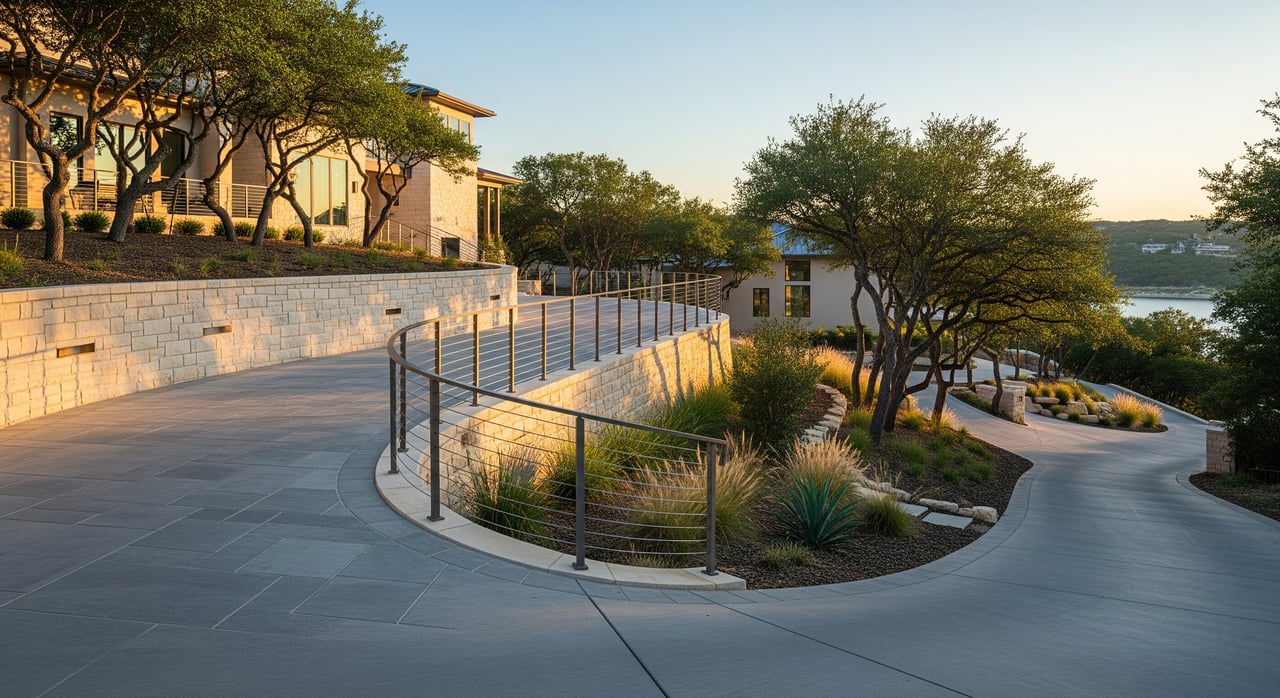
Rain in the Texas Hill Country can turn a pretty gravel driveway into a rutted channel in one afternoon. If you own or are building on a Paradise on the Guadalupe lot in Canyon Lake, you know the terrain is beautiful and steep, with thin soils over limestone. You want a driveway and terraces that look intentional, drain correctly, and hold up when storms hit. This guide shows you how to guard your drive and slopes with smart surfaces, drainage, and native planting, without sacrificing curb appeal. Let’s dive in.
Canyon Lake sits in classic Hill Country terrain. Slopes can be abrupt, soils are often shallow and rocky, and storms can be short and intense. That combination creates fast surface runoff and a higher risk of erosion along drive edges and on terraces. Designing for controlled flow and infiltration is essential.
Many Paradise lots sit near tributaries that reach the Guadalupe River. Managing runoff protects your property and helps keep downstream waters clearer. Before you regrade or add major drainage features, verify whether your lot has any floodplain or aquifer restrictions and check local permitting. It is smart to confirm flood maps, Comal County floodplain requirements, and any state stormwater rules before you move dirt.
Your plan works best when you understand how water travels on your site. Spend time during a steady rain to see where sheet flow becomes concentrated, where water crosses your driveway, and where rills start. Note bedrock outcrops and any existing low points or gullies.
Measure the general slope of your driveway run and adjacent yard areas. If you are unsure about infiltration, do a simple percolation test or consult a local contractor. Locate wells, septic components, and utilities, since drainage features need setbacks and careful routing. If any work may affect a creek corridor or mapped floodplain, talk with the county before you proceed.
Your driveway surface sets the tone for both performance and curb appeal. The goal is a firm, permeable surface with a clear edge that sheds water to planted areas instead of channeling it down the wheel path.
Stabilized gravel uses crushed stone with fines or a binder to resist rutting while remaining permeable. It keeps the Hill Country look, reduces runoff compared to solid paving, and is cost effective. On slopes or weaker subsoils, add a geotextile or geogrid underlayment to limit migration and improve load support.
For a finished look and better performance, include a defined edge. Stone curbing, timber edging, or limestone bands keep gravel contained and create clean lines that blend with local materials.
Cellular grids, made of interlocking plastic or concrete cells, hold gravel in place and spread loads. They reduce washouts and keep a neat appearance over time. Proper subgrade preparation is key. When installed correctly, grids offer strong support with a natural visual finish.
Permeable pavers provide a more formal look for aprons, parking pads, or turnouts while allowing water to infiltrate through aggregate-filled joints. They are durable, but they require a designed base and periodic joint cleaning to maintain infiltration. Pair pavers with planted swales at the edges to receive and filter runoff.
At driveway low points, culvert outlets, or where flows concentrate, install a stabilized apron. Embedded stone, riprap, or a shallow concrete apron prevents scour. Tie aprons into adjacent swales and plantings so they read as part of the landscape, not an afterthought.
Surfaces alone cannot handle Hill Country storms. You need earthworks that slow, spread, and soak water near where it falls.
A dry, planted swale is a shallow channel that collects and slows runoff from the driveway. Line the swale with native grasses and groundcovers to trap sediment and help water infiltrate. Size the swale to handle runoff from the drive length and slope, and outlet to a stable, vegetated area.
On long slopes, add small terraces or grade breaks to shorten the flow path. Each break reduces water speed and gives it a chance to soak in. Terraces can be softly contoured with planting or lightly retained with local limestone for a natural, regional look.
In steeper swales, place low rock check dams every few yards to create small pools, catch sediment, and cut velocity. Use local stone so they blend with the setting. Keep a lower center notch so water flows where you want it.
If soils allow, add a gravel-filled trench beneath the swale or along drive edges to increase storage and infiltration. Respect setbacks from foundations, wells, and septic features. Where infiltration is limited, focus on slowing and safely dispersing flow onto vegetated areas.
Plants do more than soften hard edges. The right native mix locks soil in place, filters sediment, and adds four-season beauty.
Choose low, mat-forming natives that can handle heat and light foot traffic.
Clumping grasses send roots deep and provide texture.
Use compact shrubs at terrace fronts and at points where water concentrates. Dwarf sumac and flame acanthus add structure and seasonal interest. In tighter spots, consider native rosemary types suited to your microclimate. Set larger trees back from pavement to avoid future root lift near drives.
Plant in fall or early spring to reduce stress and improve rooting. On steeper fills, install coir or other erosion control blankets until plants take hold. Apply a light mulch between plants to limit splash erosion and conserve moisture. Water deeply but infrequently during the first growing season to push roots down, then let the plants settle into native drought tolerance.
Erosion control is a system. Performance depends on small, steady care, especially after the first big storms.
Expect a full growing season for plants to deliver their best erosion control. Temporary blankets and careful watering bridge the gap until roots are established.
Think of your driveway as a system that handles rain at each step from the top of the slope to the bottom.
This approach protects the driveway, reduces runoff, and frames your home with an intentional landscape that fits the Hill Country.
Building or improving on a hillside lot is a team effort. A contractor with Hill Country erosion control experience can size swales, terraces, and check dams correctly, and a native-focused landscaper will select the right plants for your sun, soil, and slope. If you are still designing or preparing to sell, pairing practical erosion control with attractive curb appeal can add confidence for buyers and protect your investment.
If you want neighborhood-specific guidance or introductions to trusted local pros, The Renfeld Group is here to help. We combine land and custom home insight with polished presentation to help you plan well and move forward with confidence. Request a Custom Market Plan and let’s map a clear path for your Paradise on the Guadalupe property.

ADDRESS 453 W San Antonio St New Braunfels TX 78130
ADDRESS 453 W San Antonio St New Braunfels TX 78130